
Shaggy inkcaps, freshly emerged (above) and in various stages of deliquescing (below). The caps don’t have gills or pores to release the gills. Instead, they disintegrate into a black mush, starting at the rim and heading inwards.

Wildlife from Wolverhampton and nearby
Shaggy inkcaps, freshly emerged (above) and in various stages of deliquescing (below). The caps don’t have gills or pores to release the gills. Instead, they disintegrate into a black mush, starting at the rim and heading inwards.

Sulfur tuft mushrooms can appear during the autumn fungi flush, but they are also one of the few hardier types which can throw up new fruiting bodies even in the depths of winter.

They grow near the base of tree stumps and on fallen logs. When wet, as here, the caps can look like they have a gelatinous surface.

The illustrators of fairy stories usually portray idealised versions of this mushroom, a fly agaric, which are fresher than this one.
It was growing, several years ago, right by the footpath from the centre of Stratford to Anne Hathaway’s cottage at Shottery.
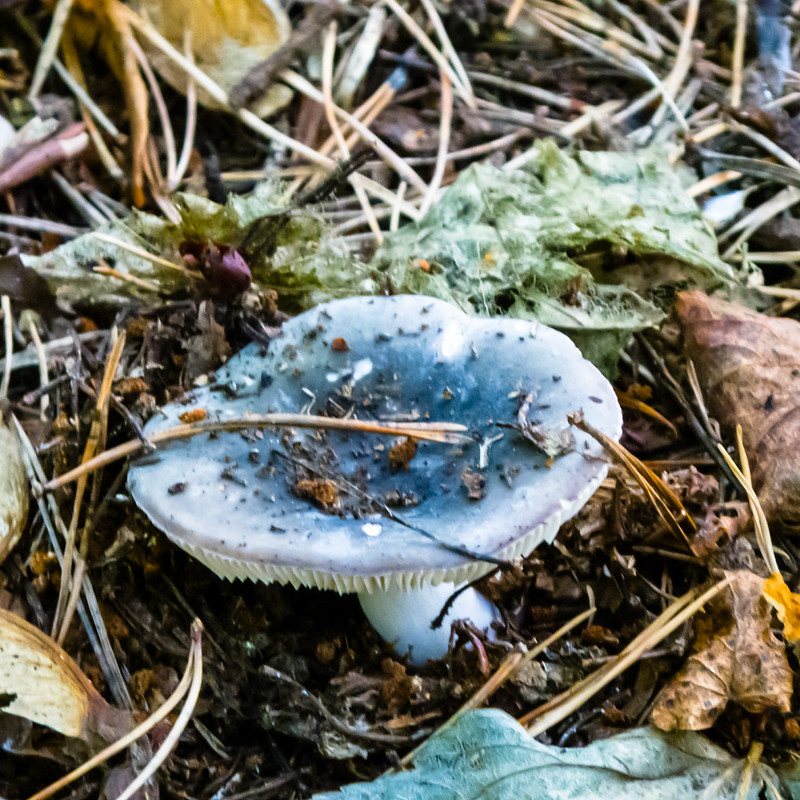
This far, I’ve not seen very many mushrooms this autumn fungi season. So here’s one from a dozen years back. It’s some kind of russula – the group of mushrooms sometimes also called brittlegills. Possibly it’s a charcoal burner.
It was growing in Himley Plantation: a Woodland Trust property which can be good for fungi.

A long-bodied cellar spider, barely moving from the centre of its web, even when I brought mobile phone up close to get these pictures.

Thrusting up where a garden wall met the pavement, some interesting-looking mushrooms. I couldn’t bend down far enough to see stems, but I was assured they were there.