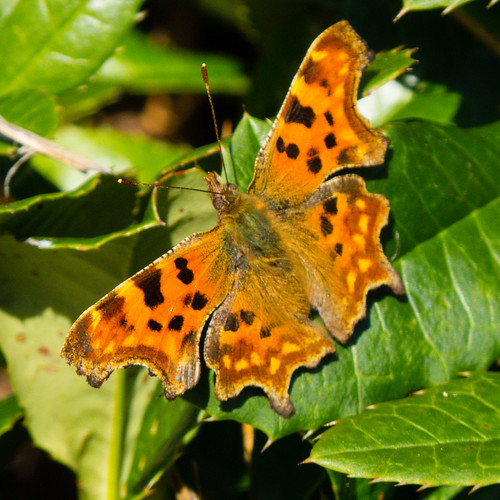
Second butterfly I noticed before the end of February, in the warm spell at the end of the month. This comma was flittering around the church at Perton, landing several times on the church wall before settling here on a nearby bush.
Second butterfly I noticed before the end of February, in the warm spell at the end of the month. This comma was flittering around the church at Perton, landing several times on the church wall before settling here on a nearby bush.

I was walking along the footpath along the Penk between the two pools at Perton. On the wooded section, there was a male blackbird every three or four yards. They were either in the undergrowth, establishing a territory, or, like this one, occupying a vantage point in a bush. There was no sign of even a single female.

Lesser celandines, which were beginning to flower all around during the warm spell late in February.

Heronry on a weeping willow overhanging the lake at Wollaton Park, Nottingham. At least ten birds were visible at one time from further round the shoreline, with a couple of nests peeping through the foliage. One pair of birds briefly mated in the short time we were watching.
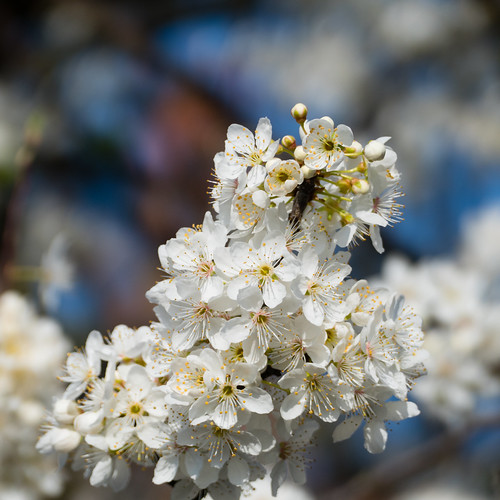
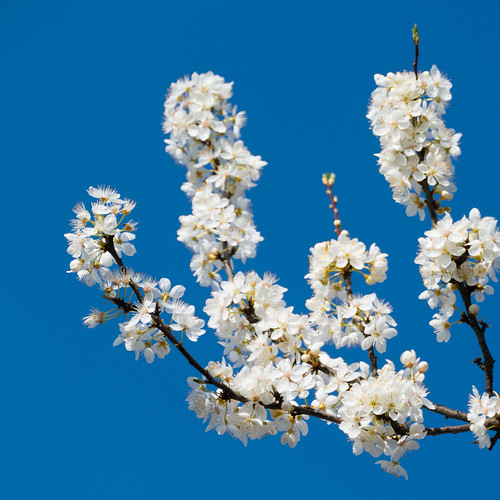
White cherry blossom on a tree in a front garden on Albert Road. Seen on a spring-like February morning.

Female from the small flock of tufted ducks which have been over-wintering on the boating lake at West Park. For once, close to the shore when diving in search of things to eat.