
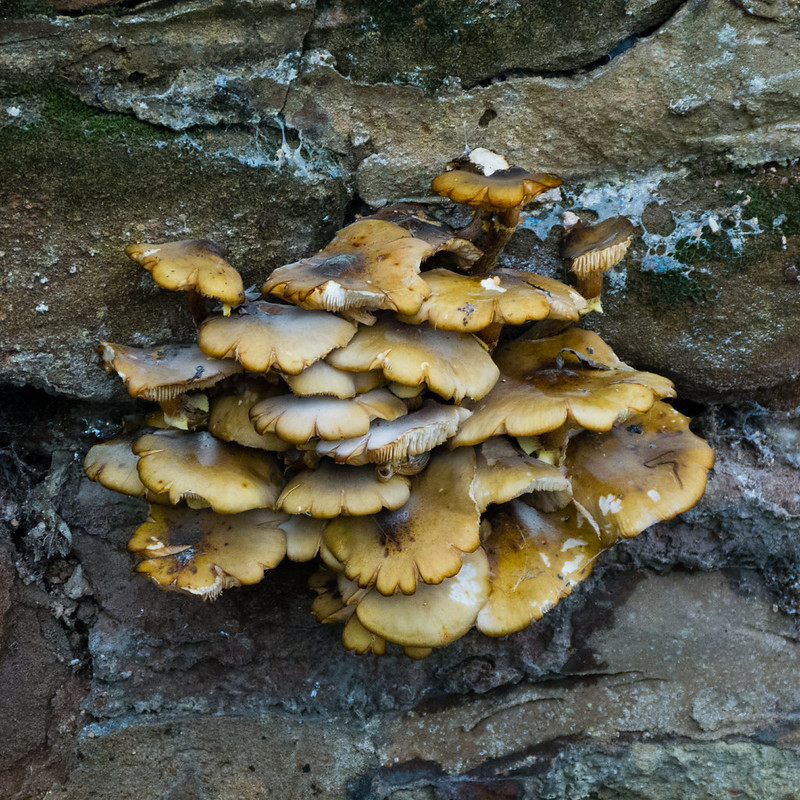
Cluster of honey fungus which had grown through the stone wall of a garden between the two greens at Tettenhall: views from above and below.
Wildlife from Wolverhampton and nearby
Cluster of honey fungus which had grown through the stone wall of a garden between the two greens at Tettenhall: views from above and below.

Dead tree in Wightwick Manor woods. There are nest holes above, possibly woodpeckers’.
Honey fungus spreading high up the trunk shows why the tree died – clumps opf the fungus featured in the previous post.

Honey fungus was until recently thought to be a single species, but it’s now been found there are a handful of closely related species. This may be an explanation for the variability of appearance (some of which is seen in these pictures) and in habitat.
All types live on wood: some only on dead wood. Others live on trees, including some of the economically important ones. These destroy the roots of the roots of the trees they are parasiting, eventually killing the host.
The underground structures of honey fungus may form a single organism for an entire wood or forest. The largest known single organism alive on earth today is a north American honey fungus spread over more than three square miles and thousands of years old.
The fruiting bodies are common. They usually grow in clusters, found on the base or top surface of stumps or on fallen or felled trunks. On living trees they are usually (but not always) low down.
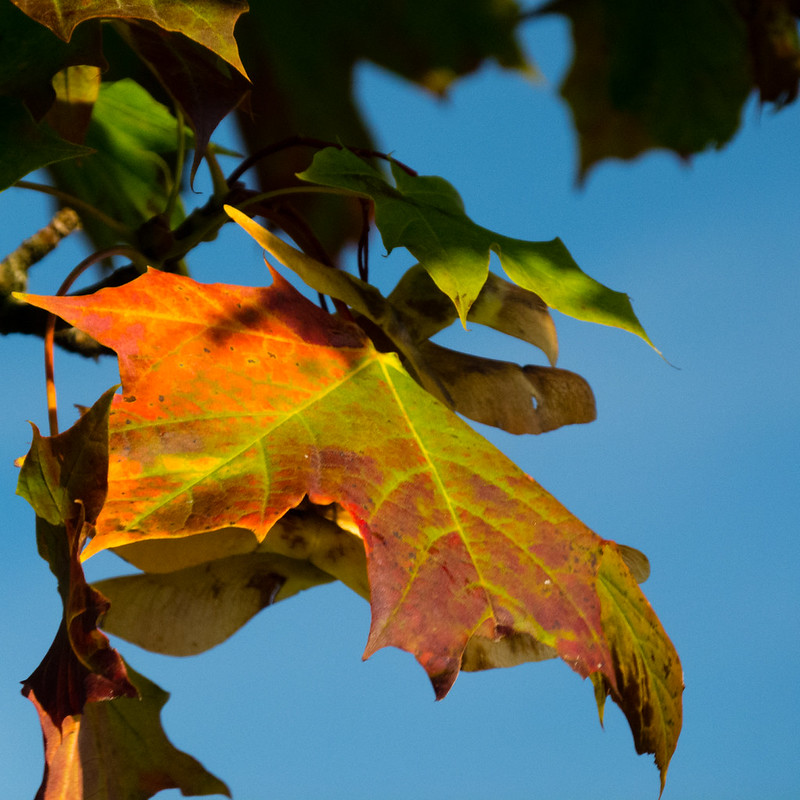
Maples can develop stronger autumnal colours than most other native deciduous trees. These leaves and seeds were changing colours on their trees in September.


House martins circling round and landing by their nests on the last houses before the golf course on Penn Common.
The birds, possibly this year’s young, were beginning to get ready for their long migration when these pictures were taken towards the middle of last month.
https://www.flickr.com/photos/davea2007/albums/72157663564643330″
Plump berries on bryonies climbing over roadside hedges, ripening as they pass from green to yellow, orange and finally red.