
Artichoke flowering, looking like a thistle on steroids – it is indeed related to thistles. The edible part is the bud before the flower has begun to open.
Wildlife from Wolverhampton and nearby
Artichoke flowering, looking like a thistle on steroids – it is indeed related to thistles. The edible part is the bud before the flower has begun to open.

Ragworts include poisonous substances (though they are not as deadly as some scare stories claim). The main food plant for cinnabar moth caterpillars like the one featured here are those self-same ragworts.
The caterpillars are not harmed by the ragwort poisons. Rather they retain and concentrate these poisons in their bodies. Their defence against predators is to adopt bright warning colours: yellow and black in the caterpillars, scarlet and black in the day-flying adult moth. The message is: eating me will be unpleasant, or worse.
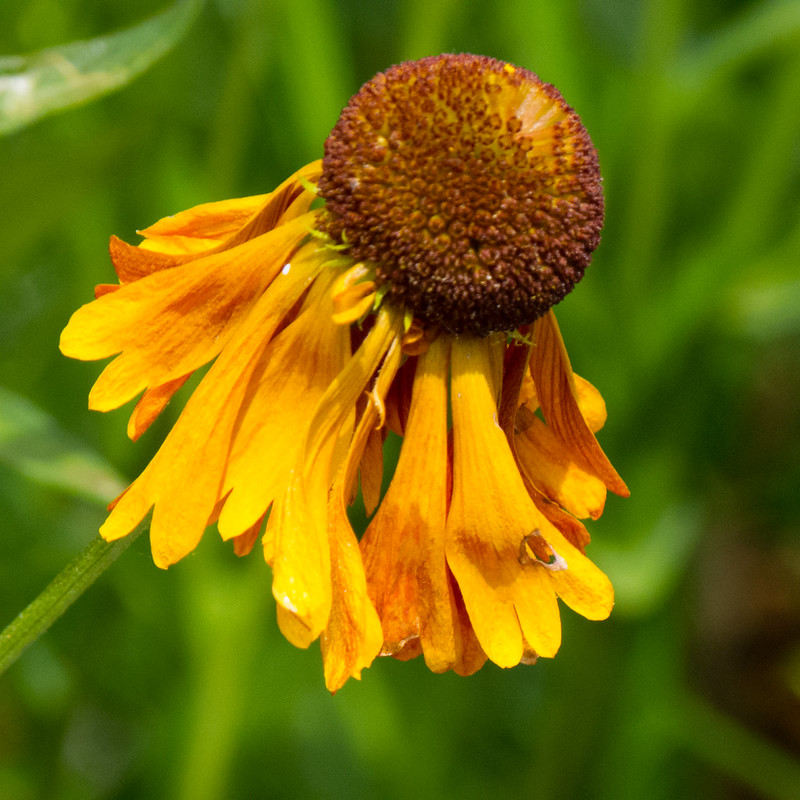
Garden coneflowers at the end of the flowering season, the petals drooping before they drop off completely.


Thistle flower. A meadow brown butterfly was feeding on the flower, then a small white butterfly came along. After some hesitation and a couple of false starts, it landed and started to feed on the opposite side of the same flower. After a short while, the white took off again and flew off, with the meadow brown continuing to feed.

Teazel plant standing at least ten feet tall in the vegetation around the pool in Compton Park. Since these pictures were taken the plant has started to bend over almost double under the combined effects of its own weight and summer winds.

Large insect, looks like a hornet. But it’s a hoverfly, imitating a hornet to protect itself, so it’s no threat.
Hornet hoverflies were first recorded in Britain in the phoney war summer of 1940. They are extending their range, but even presumably up to date websites say that they are just found in south-east England, with very occasional sightings in the south-west.
This one was feeding earlier today on the flowers of a thyme in Wolverhampton. It’s a female – the males have eyes which meet in the middle.