
I was standing at the edge of West Park lake, watching the waterfowl. A young rat appeared from the undergrowth to mu right, scurried along the bank inches from my feet, and dived into the next patch of undergrowth by my left.
I was standing at the edge of West Park lake, watching the waterfowl. A young rat appeared from the undergrowth to mu right, scurried along the bank inches from my feet, and dived into the next patch of undergrowth by my left.
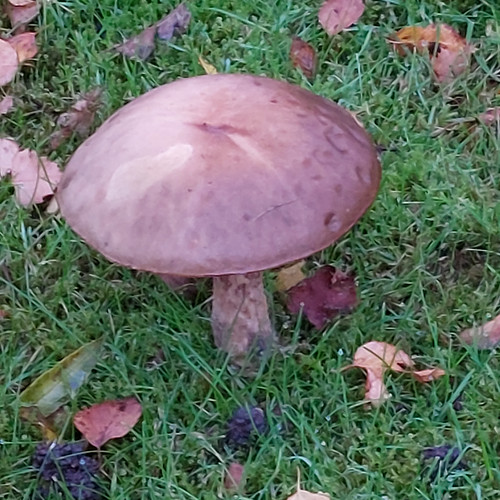
Boletes are mushrooms which release their spores through pores on the underside of their caps, not gills. This species have a symbiotic relationship with birch trees, as on the lawn in front of these flats.
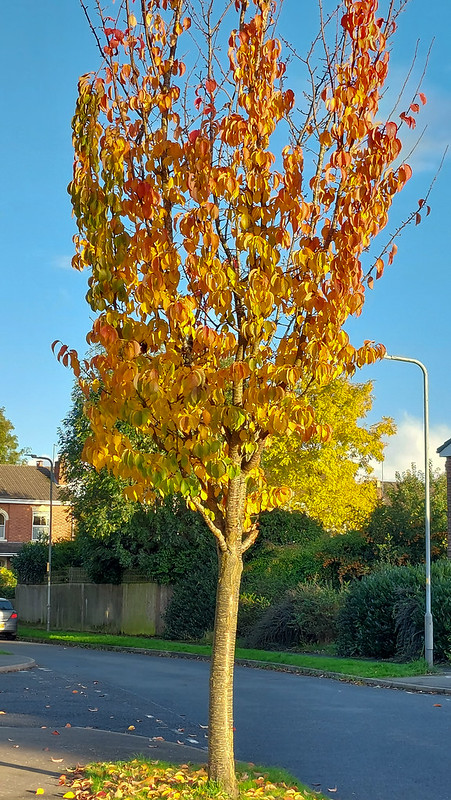
One of the cherry trees planted on the roadside of a quiet street, with its leaves changing colour for the autumn. The leaves were already bdeginning to fall when I took this picture. A couple of days later they had all gone.
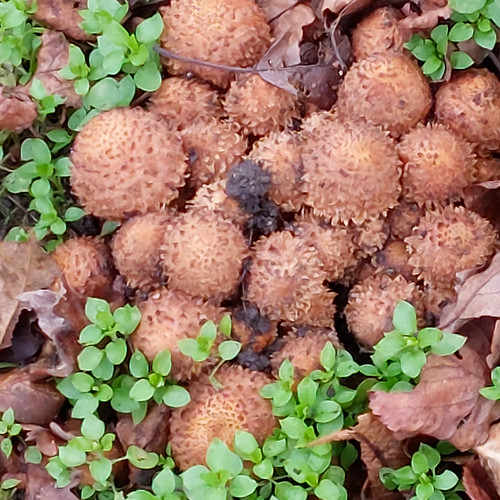
Shaggy scalycaps, mushrooms with an appearance which fits the name. These were growing at the base of a roadside apple tree. One clump looked like they had emerged the that night; the neighbouring clump the previous night.
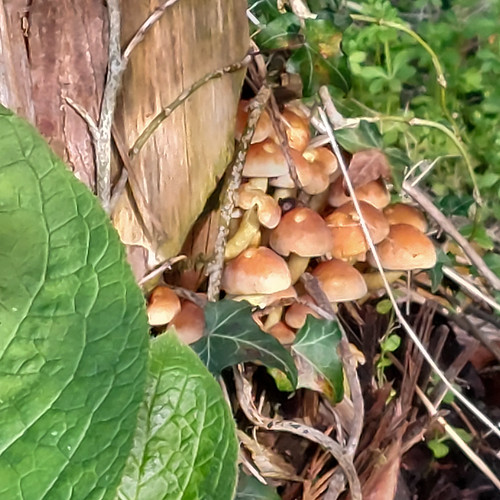
A cluster of sulfur tuft fungi on the stump of a tree: quite likely they had been responsible for the tree needing felling.
Sulfur tufts might be found any time until the end of the winter. They are one of the most cold-resistant of fungi, able to recover even after being frozen solid.

One of West Park’s collection of Japanese acers just beginning its autumn foliage colour change. The acers in the park (trees and bushes) seem to have been carefully chosen for contrasting leaf colours. This one is a lone tree near the edge of the lake.