
More mid-February Devon violets in flower. These were growing in the roadside by the dead-end quiet lane which runs along the RSPB Bowling Green Marsh Reserve in Topsham.
More mid-February Devon violets in flower. These were growing in the roadside by the dead-end quiet lane which runs along the RSPB Bowling Green Marsh Reserve in Topsham.
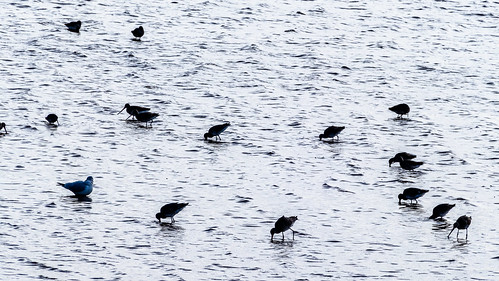
Our visit to the Exe estuary this year was timed so that I was seeing the river when the tide was low, so most of the waders were feeding way too far away for me to get any clear pictures of them feeding – apart from this smallish group which came closer to the Goat Walk at Topsham one morning.
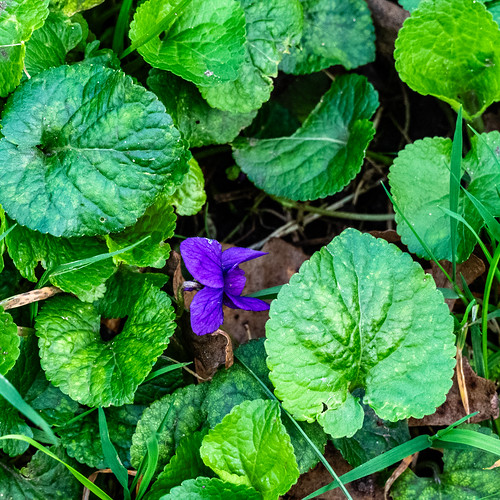
Mid-February, and already the violets in the favoured climate near the south Devon coast were fully in flower. These were in a clump which were growing in the churchyard at Topsham.

The Exe estuary at low tide has huge expanses of exposed soft mud, pullulating with invertebrates. That, together with its temperate climate, make it an important site for large flocks of overwintering birds: geese, ducks, waders and more.
When the water’s out, there’s usually a handful of turnstones close to the Goat Walk at Topsham. They wander, more or less as a group, from one clump of seaweed to another, probing the ground searching for things to eat.

A gaudy sunset, probably the most vivid one I’ve ever seen, looking over the Exe estuary at Topsham. Pictures taken with a mobile phone camera, so the white balance varies from shot to shot. In my memory, the light was even redder than it appears in any of the pictures in the sequence.

Narcissi with the flowers already open almost a fortnight ago, on the pavement of a quiet residential street.