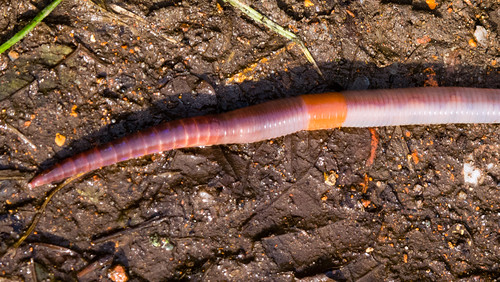
Earthworm hurrying along a canal towpath.
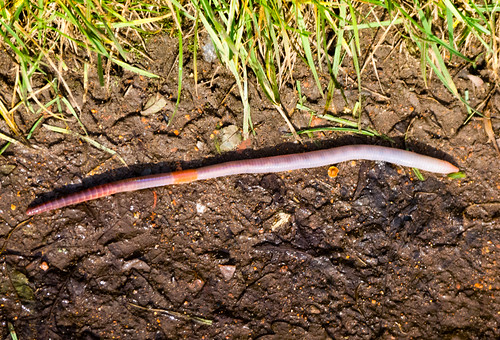
The orangish section, roughly one third of the body length behind the head, is the clitellum. It holds the worm’s eggs. This worm may have been in such a hurry to find a good spot for its eggs.
Earthworm hurrying along a canal towpath.
The orangish section, roughly one third of the body length behind the head, is the clitellum. It holds the worm’s eggs. This worm may have been in such a hurry to find a good spot for its eggs.

A bee gathering pollen from ivy flowers has got a heavy dusting of the pollen on its legs and body.

Towards the end of October, a belated fungi flush finally got underway. There were some common and familiar species, and other species which I don’t remember having seen before.
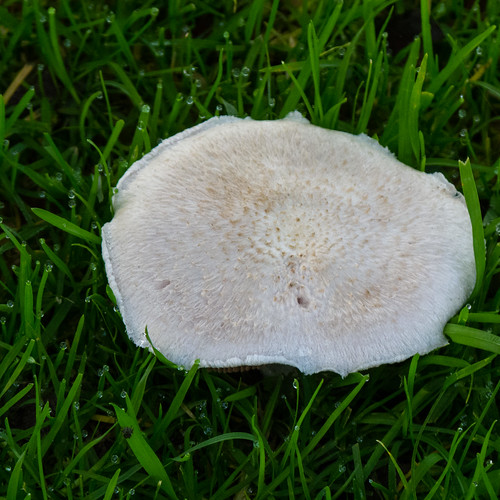
This is a species I failed to identify. As so often with this year’s pictures, it was taken on a morning after overnight rain.
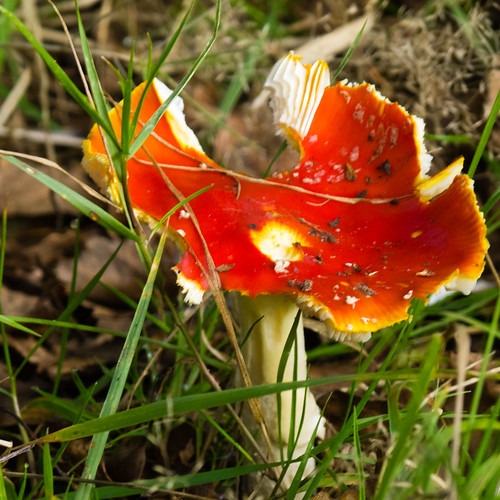
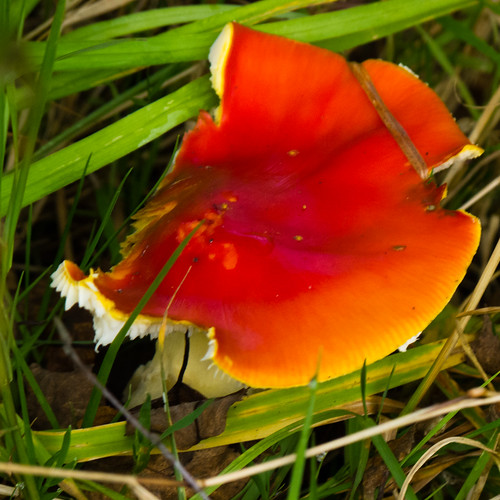
Being half-hidden in grass hadn’t protected these fly agaric mushrooms from being eaten.

This dragonfly landed on the parapet of the bridge which carries Castlecroft Road over the Smestow Valley Railway walk just as I was taking the pictures which featured in the previous post.

It didn’t seem at all worried as I turned my camera in its direction and took a series of pictures.
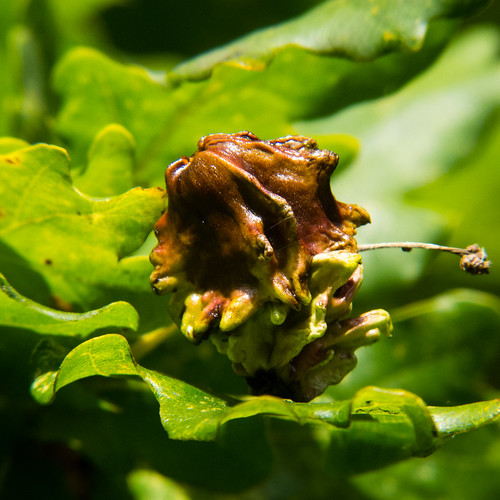
Distorted acorns produced when a tiny wasp lays her egg in them.
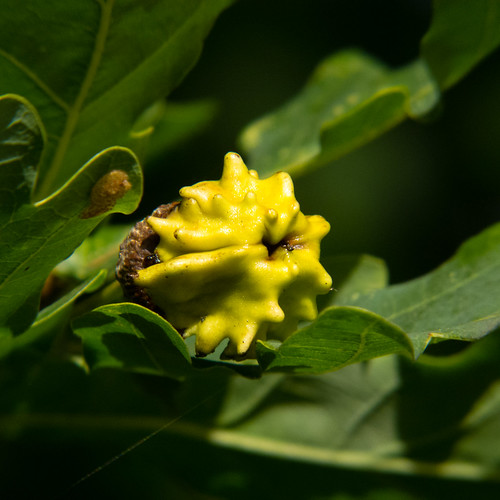
Growing on one of the oak trees by the Smestow Valley Railway Walk, right by Castlecroft Road. The view from the bridge put me on the level with the acorns.
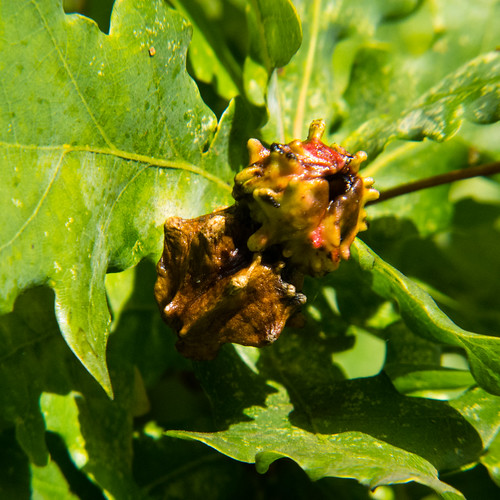
According to sources elsewhere on the web, there are occasional years where these galls are very common. I don’t remember ever having seen them before. As far as I could see, every acorn on that oak was affected. I’ve been looking round at other local oak trees since, any not seen any more of these galls – though I haven’t seen many normal-looking acorns either.