Exe estuary 201602 – dark bellied Brent geese

Dark bellied Brent geese

Dark bellied Brent geese commute annually between their summer breeding grounds in Siberia and their winter refuge on the coasts of western Europe, several hundred in the Exe estuary.

Their preferred food is eel grass, which grows between the high and low tide marks in the estuary. When the water is low they graze on this.

When high water drives them ashore, they gather in hundreds on Bowling Green Marsh or Exminster marshes, sometimes crossing the river in large flocks to shift between these two areas. Smaller groups separate off to search for food in the short grass of Dawlish Warren golf course (main picture).

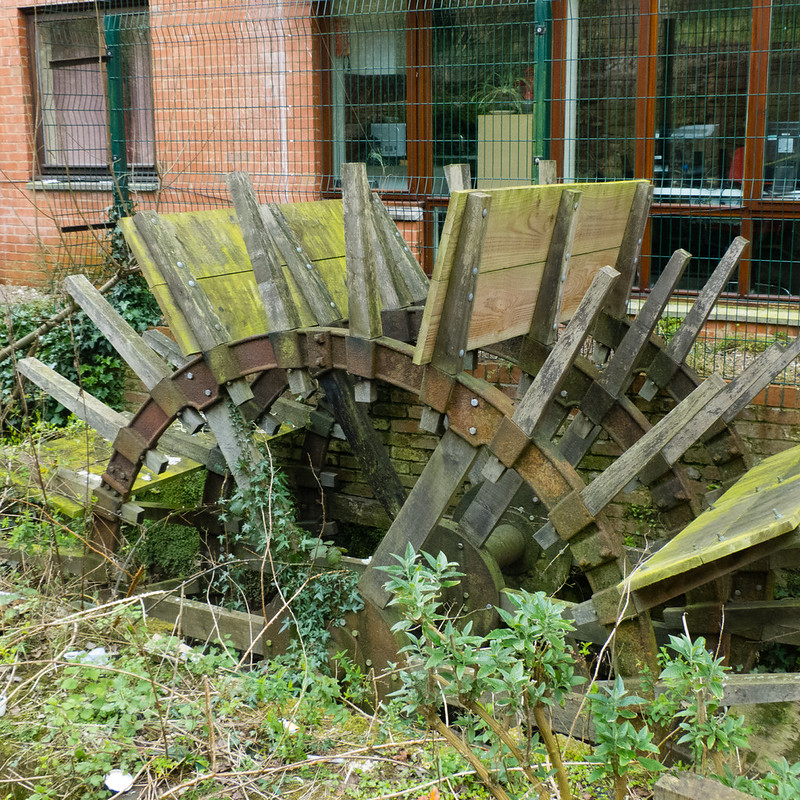
Exe estuary 201602 – Millwheels and old machinery, Cricklepit Mill, Exeter

Millwheel, Cricklepit Mill, Exeter

Cricklepit Mill is the last remaining mill powered by the water of the River Exe in Exeter. The building, now restored, houses the offices of the Devon Wildlife Trust. One mill wheel is still in operation, briefly, once a month as a showpiece and to produce DWT-branded stoneground flour sold to raise funds.

The mill’s wildlife garden and the leet which supplies its water attract wildlife, most spectacularly otters and kingfishers. The Trust give a lot of publicity to footage of the otters caught on infra-red cameras, so they are likely more often filmed than seen. But we got a brief glimple of a kingfisher as we arrived, before it headed off to a quieter stretch of the river away from us and a visiting group of primary school children.

Exe estuary 201602 – Witch’s broom

Witch's broom

Witch’s broom is a tangled mess of growth of shoots at the ends of the branches of various species of trees. It happens when there is an imbalance between the various plant hormones regulating growth as a result of the tree suffering one or other sort of infection.

Witch's broom

Exe estuary 201602 – starling roost, Vigilant, Topsham quay

Exe estuary 201602 - starling roost, Vigilant, Topsham quay

The Vigilant is a century or so old former Thames barge, slowly being restored by Topsham Quay.

Starlings were gathering on its superstructure in the late afternoons, taking positions fitting their place in the pecking order.

They may have been pausing before heading a short distance upriver to join the larger group in the daily murmuration near the motorway bridge across the Exe.

Exe estuary 201602 – starfish on Exmouth beach

Exe estuary 201602 - starfish on Exmouth beach

The next few posts will be from a recent visit to the Exe estuary in south Devon, an area I often visit at this time of year. It’s just in time to catch the mass of birds which use the area as a winter refuge before they head off for their summer breeding grounds, but late enough in the year for spring growth in some of the vegetation.

The area right by the river downstream of Exeter is an almost continuous series of nature reserves, run by the Devon Wildlife Trust, the RSPB, and ending in the Local Nature Reserve at Exmouth and the National Nature Reserve on the other side of the river’s mouth at Dawlish Warren.

This starfish had been left by the retreating waters near the high tide mark on the long sandy beach at Exmouth.