Common Blue Damselflies (Enallagma cyathigerum) resting

Common Blue Damselflies (Enallagma cyathigerum) resting

When the pool and wetland area in Compton Park was first created, the mix of vegetation planted still left plenty of open water. Among the other species attracted in these early years were lots of different types of damselflies and dragonflies, including these common blue damselflies.

Common Blue Damselflies (Enallagma cyathigerum) resting

Quite rapidly, the vegetation took over, so that in recent years there was very little visible open water at all. Mallards and moorhens stopped nesting there. Fewer and fewer damselflies and dragonflies, representing fewer and fewer species, put in an appearance.

Finally, some effort has been put into managing the pond. An area of open water has been recreated. Will it have been enough to attract back some of the missing insects?

Flag iris (and one bee)

Flag iris (and one bee)

Yellow flag iris flowers on the pond at Compton Park. The bee in the first picture was emerging backwards from the flower.

Snail group

Snail group

A gathering of snails clinging together to a fence post by one of the stiles giving access to the Smestow Valley LNR’s Railway Walk.

Poppy, second flower

Poppy, second flower

The petals had now fallen from the first flower on this garden poppy. The developing seed head can be seen rising above this second flower in one of the pictures.

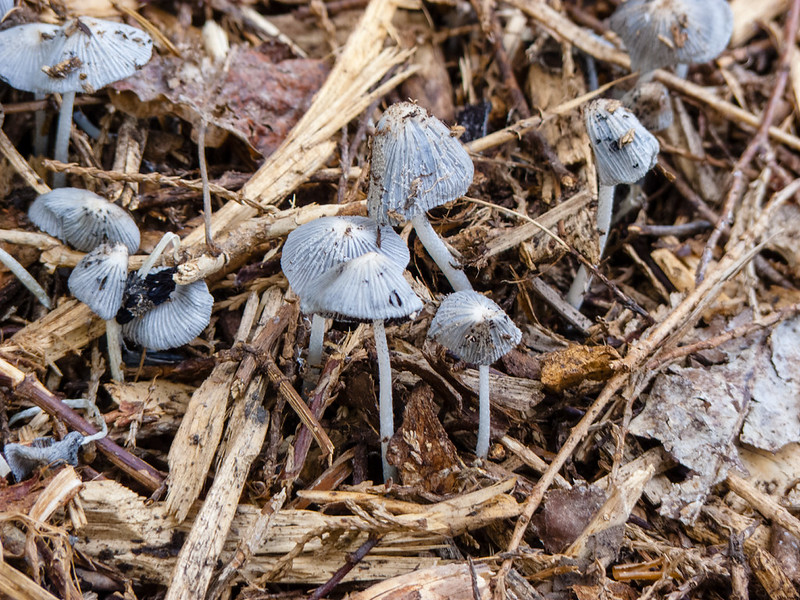
Hare’s foot inkcap on wood chip mulch

Hare's foot inkcap on wood chip mulch

This year’s dry spring has meant there have been very few mushrooms so far.  From way back in 2010. here are some hare’s foot inkcaps. The only times I’ve ever seen them in the west midlands, they have been growing on wood chip mulch.

Poppy, first flower

Poppy, first flower

A garden poppy, which has self-seeded itself in what is technically inside, forcing its way up through a gap between two flagstones. This was its first flower of the year.