
From the same magnolia which featured in a post yesterday, the flowers now opened and at least one having been fertilised already.
Wildlife from Wolverhampton and nearby
From the same magnolia which featured in a post yesterday, the flowers now opened and at least one having been fertilised already.

A pair of ravens in the air over West Park. Not sure exactly what they were doing, but they weren’t just passing over. These shots span a ten minute period where I saw them first from one spot, then later from elsewhere. On the second sighting, they seemed to be circling one of the islands.

Don’t look too closely, and the texture is more like the back of some small furry mammal than something from the plant kingdom. Actually, they are the buds of magnolia flowers, just about to open.

I didn’t notice it arrive, but a second parakeet joined the female at the top of one of the West Park trees [yesterday’s post]. Whether the angle was better or more light was on it, but it was possible to see this one’s red “collar” on its neck feathers: it was a male. It almost immediately began courting the first arrival. He appeared to preen some of her head feathers, and did pluck some of the leaf buds from the tree, feeding them to her, repeating this several times.
We thought it was likely that they would begin mating. But we left them to it, thinking that would be more likely if they didn’t have an audience. Instead we walked around the lake and, as chance would have it, were in a position to see the cormorant catching and eating a fish [posts earlier this week].
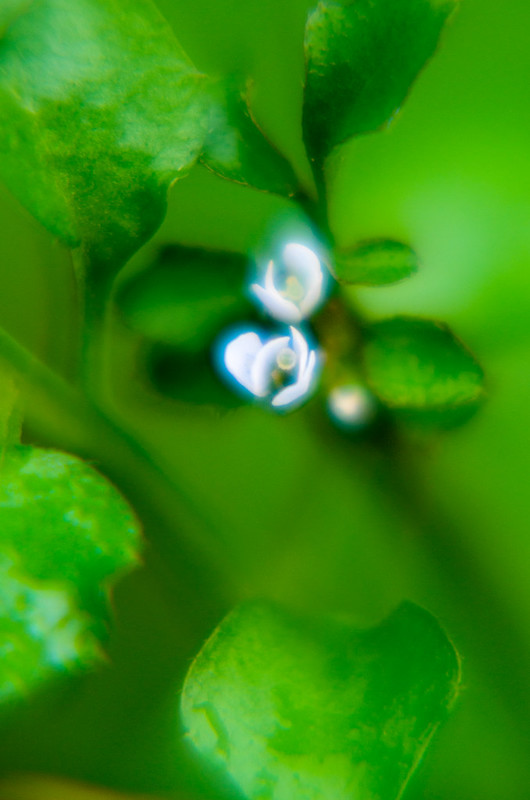
This is yet another small inconspicuous weed with tiny white flowers. This one is a bittercress, possibly wavy bittercress Cardamine flexuosa.

Once again a lone parakeet high in a tree, hard to see clearly because of the branches below. It was a female, but this was only proved by later events. Occasionally preening, occasionally stretching to nibble at the tender leaf buds nearby, the bird seemed totally undisturbed as I cricked my neck directly underneath.
I’d been watching for about five minutes, and the bird must have been up there for longer, when things began to change.
To be continued …