Gathering for winter: shovellers

Gathering for winter: shovellers

West Park lake serves as a refuge for wildfowl which spend the warmer months dispersed elsewhere. The sizes of the goose and swan flocks increase, but most noticeable are the ducks. A handful of tufties usually hang around all year, but in winter the numbers increase perhaps tenfold. Shovellers are off in the spring, and turn up again come autumn.

When I took these shots in mid-October, the birds were just coming out of eclipse, having lost their breeding plumage but not yet completely achieved its winter replacement. Most noticeable in the males.

Autumn fungi: amanitas on a lawn

Autumn fungi: amanitas on  a lawn

Amanitas are a group of gilled mushrooms which include the red capped fly agaric. Also in the group are some of the most deadly poisonous fungi (such as the appropriately named death cap) and others highly prized by gourmets.

These were too far away for a proper ID, but I think they were probably either the blusher or the panther, two species which are quite easy to confuse.

Tiny slug on a wet bin

Tiny slug on a wet bin

Dustbin day, with bins put out all all along the pavements. Overnight rain had left the bins wet, so one bin had attracted a tiny slug which was crawling slowly over its lid.

Bittersweet nightshade ripening

Bittersweet nightshade ripening

Some of the berries still green and unripe, but most had already turned red. Bittersweet nightshade, though not as poisonous as some of its relatives, is still to be avoided. These twigs were escaping through the fence of a front garden, at a handy height for me to get close-ups on my mobile.

Bittersweet nightshade ripening

Greylags staring at me

Greylags staring at me

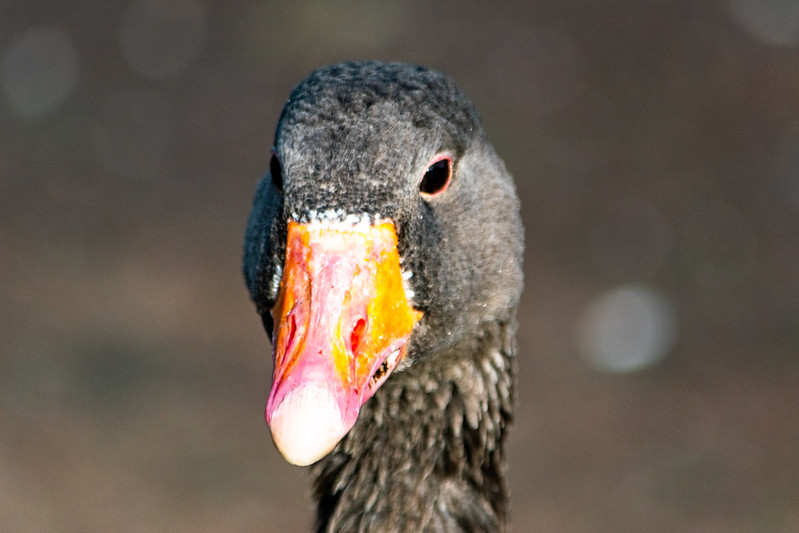
Two of the greylag geese from the West Park flock, watching me carefully. I wasn’t sure whether the attention was because they thought I was a potential source of food, or of danger.