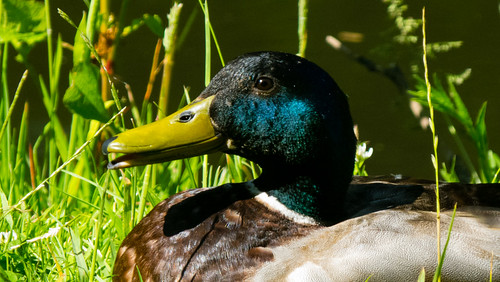
Once the female mallard has laid her eggs, the male heads off, sometimes with other males, to a safe spot to moult to loose his conspicuous breeding plumage.
This process, called going into eclipse, had just begun with the birds here.
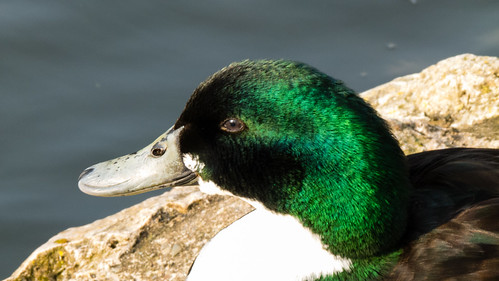
Once the female mallard has laid her eggs, the male heads off, sometimes with other males, to a safe spot to moult to loose his conspicuous breeding plumage.
This process, called going into eclipse, had just begun with the birds here.
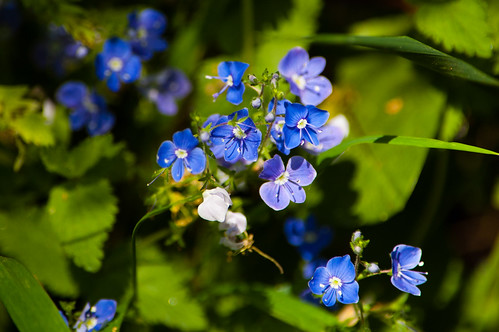
The delicate blue of a speedwell flowering in the hedgerow by the canal at Aldersley.
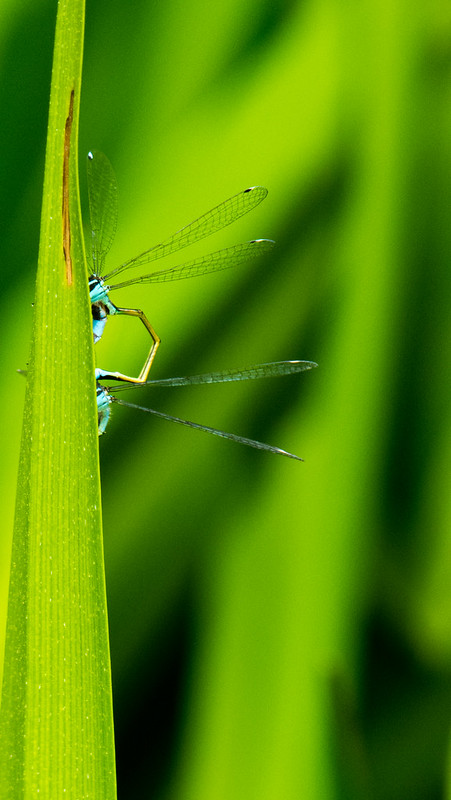
Damselflies mating: common blues and blue-tailed.
Claspers at the end of the male hold the female just behind the head.
The pair may rest on a convenient leaf – sometimes ignoring another male which is buzzing them. When resting they can assume all sorts of contorted postures. At other times, the pair may take off and fly while remaining united.

Female common blue damselflies are much less conspicuously coloured than the male (previous post). Females which are better camouflaged than their male counterparts are common in much of the animal kingdom, less so among mammals.


Common blue damselfly males seem to be the damselflies most likely to be seen around here (the females are much less conspicuous).
These were near various different bodies of water in the West Midlands.
There are usually several to be spotted in the places where they are found. The first time I saw them at the Compton Park pool this year, there were at least three hundred, probably newly emerged, as the numbers were in the tens by the following day.

Snails clustering together on the reverse of one of the boards marking an entrance of the Smestow Valley Nature Reserve.
