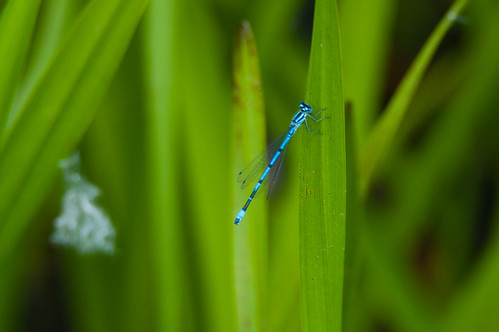
Male common blue damselfly resting on reed leaves on the pool Compton Park, taking a brief pause before another bout of flying round hoping to attract a female.
Male common blue damselfly resting on reed leaves on the pool Compton Park, taking a brief pause before another bout of flying round hoping to attract a female.
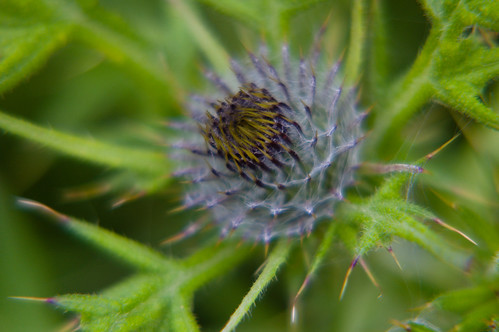
Thistle flower buds, just about to open. These were all on thistles growing near to the Compton Park pool.

Buzzard making its mid-morning ascent on a thermal. This one was circling in the sky near to Compton Park pool, where I had set out optimistically early in the hope of seeing damselflies and dragonflies.
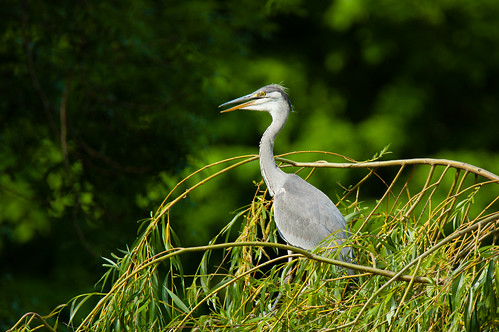
June 7th: more views of the heron youngster, standing on the same tree as in yesterday’s post. The tree seemed to be chosen as the usual hangout for the chick, usually accompanied by the mother or by both parents.
This time it seemed to be eating – possibly insects on the tree.
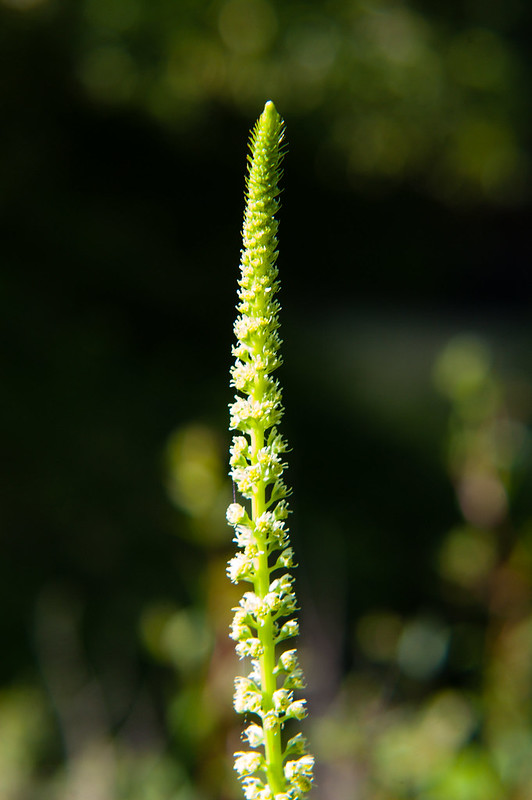
The long thin flower spike of a dyer’s rocket plant. Before the development of synthetic dyes, the plant used to be grown for the bright yellow colouring which can be extracted from it.
These pictures taken earlier this week, the plant growing by West Park pool.

June 6th: the egg or eggs in the West Park herons’ nest had apparently hatched a week and a half previously. On the day that happened, the adult birds had been paying a lot of attention to the nest and its contents.
Since then, they had seemed to be spending their time away from each other and some distance from the nest, at the water’s edge, fishing an preening.
Now they appeared, both standing on a tree growing over the water from the other island in the lake, together with a young bird still losing the down it had when it hatched. The chick is the bird in the middle. Already it looked to be almost the same size as its parents. It has an odd-looking spread wing posture characteristic of young birds in a couple of the pictures. Its rear end has a nappy-like appearance, where the down has not yet been replaced by tail feathers.