Reserving a place

Reserving a place

There’s five or six pairs of swans on the lake at West Park which have been performing the courtship ritual with each other: some started before the new year. But, with geese and ducks also in contention, there just aren’t that many good nesting sites. In good years, two pairs of swans will manage to raise cygnets; in others, just one.

So good nest sites are at a premium. Of the sites visible from the footpaths, the one which seems to be chosen first is a beach on boating lake island, a sheltered patch of bare soil which is in sun for much of the day. This swan pair had begun to occupy that space, and were busy plucking some of the feathers from their chests, a contribution to the nesting material.

Wall flowers, not wallflowers

Wall flowers, not wallflowers

Aubretia flowering. Patches of the plant cover sections of the wall between Bridgnorth’s Castle Walk and High Town, a wall favoured with plenty of sun.

Wall flowers, not wallflowers

Tufties, not yet gone

Tufties, not yet gone

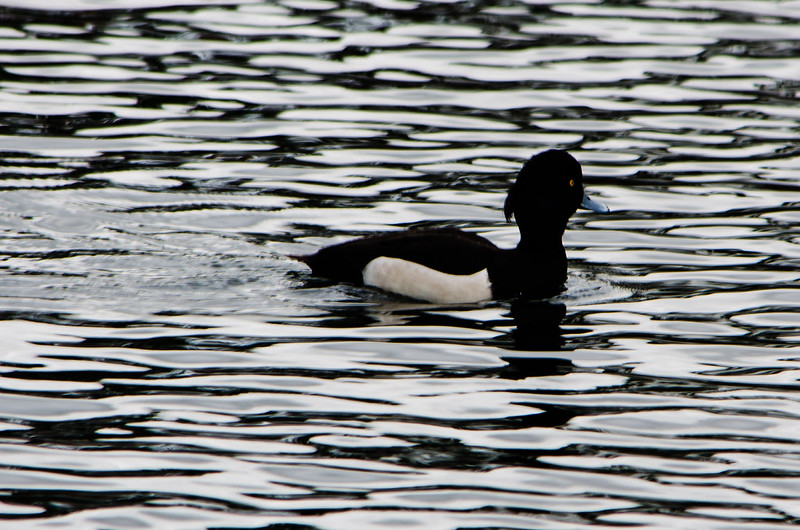
Like shovellers (yesterday’s post) some tufted ducks gather on West Park lake during the winter, dispersing again in the spring. Numbers are usually larger. At this year’s peak there were over forty. On my last visit, this was down to ten or a dozen, some of which are seen here.

Red for growth: hebe, Bridgnorth

Red for growth: hebe, Bridgnorth

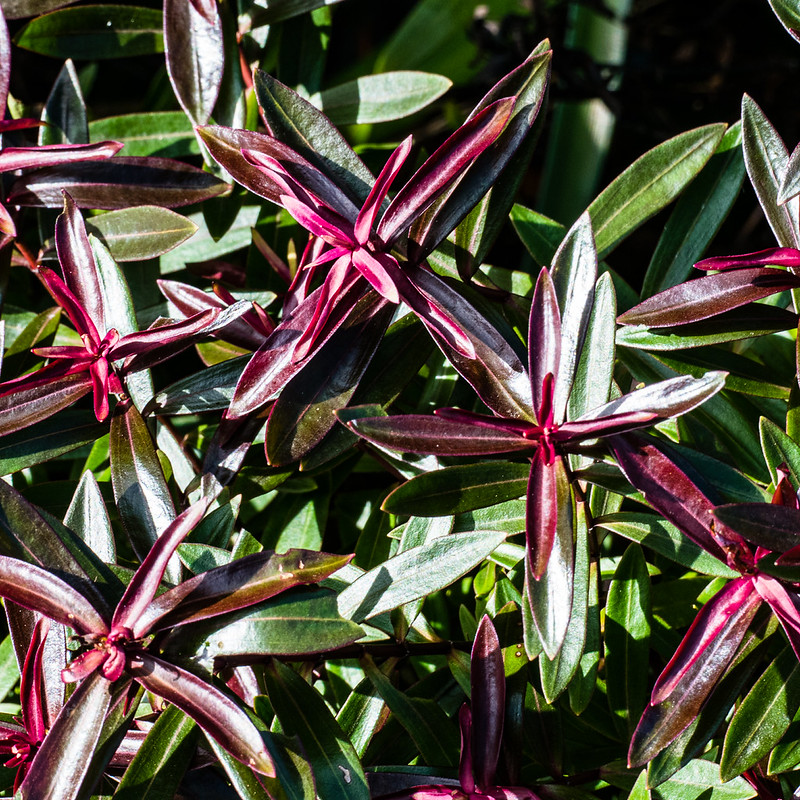
Another plant where the new leaves currently had a strong red colour, destined to fade to green as the shrub recycles the growth hormone a little later in the growing season. This one a hebe growing in front of one of the houses in East Castle Street, Bridgnorth.

Red for growth: hebe, Bridgnorth

Shoveller pair, West Park

Shoveller pair, West Park

Each winter, five or six pairs of shovellers gather on the lake at West Park, and each spring they head off to wherever they spend the warmer times of year.

This pair were the last ones still on the lake. The more brightly coloured drake swimming round with his head just below the surface of the water, shovelling up the microorganisms they feed on. The female seemed just to be swimming up and down.

Crescent-cup liverwort, Stoneway Steps

Crescent-cup liverwort, Stoneway Steps

One of the features of Bridgnorth which many visitors miss is the half-dozen or so set of steps connecting the riverside to High Town, formerly important in joining the upper town to the busy port on the river. Stoneway Steps run close by the Cliff Railway. They srart beside the lower station of the Railway, pass the Theatre on the Steps, and continue in their deep cutting in the sandstone cliffs to emerge between the top end of Cartway and the Railway’s upper station/

Crescent-cup liverwort, Stoneway Steps

Beside the steps, the bare sandstone walls of the cutting provde a home for damp and shade-loving plants like this crescent-cup liverwort.