
Lichen forming a series of concentric rings. The picture was taken some years ago in the grounds of the parish church at Totnes. Probably the lichen was on one of the old gravestones.
Wildlife from Wolverhampton and nearby
Lichen forming a series of concentric rings. The picture was taken some years ago in the grounds of the parish church at Totnes. Probably the lichen was on one of the old gravestones.
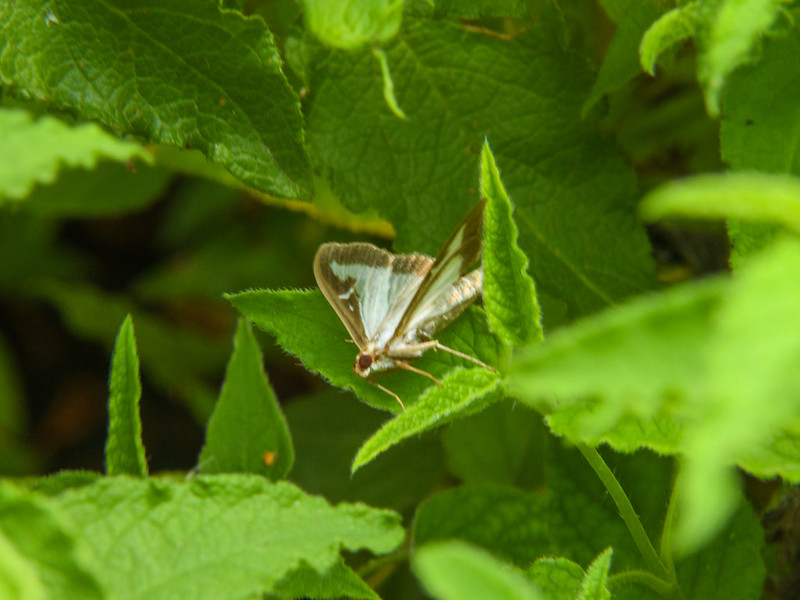
A box tree moth resting. This is yet another species with its first British record in recent decades, and a range which is gradually extending northwards. Another marker of the changes brought by global warming.

Deceivers are a quite common species of mushroom which are the fungal equivalent of birdwatchers little brown jobs. They are indeed also small and brown, and easily confused with other species.
Amethyst deceivers would be the same in a monochrome world. In fact, their pale purple (amethyst) colour is unique. Nor are they particularly common. This picture was taken on the only occasion I’ve ever seen some. They were in Himley Plantation, a Woodland Trust woodland which supports lots of interesting fungi. It was September 2014 when I saw them. When I revisit the wood, I look carefully round the area where they were, but there’s been nothing since.

Unmistakable with the ragged outline of its wings, which were held at the right angle to show the supposed comma on the underside, a comma butterfly feeds on the highest flower of a buddleia.
I think this is the only species where I saw at least one in this years first, spring, generation as well as this one in the summer. Both times, it was literally one individual, well down on the usual numbers.
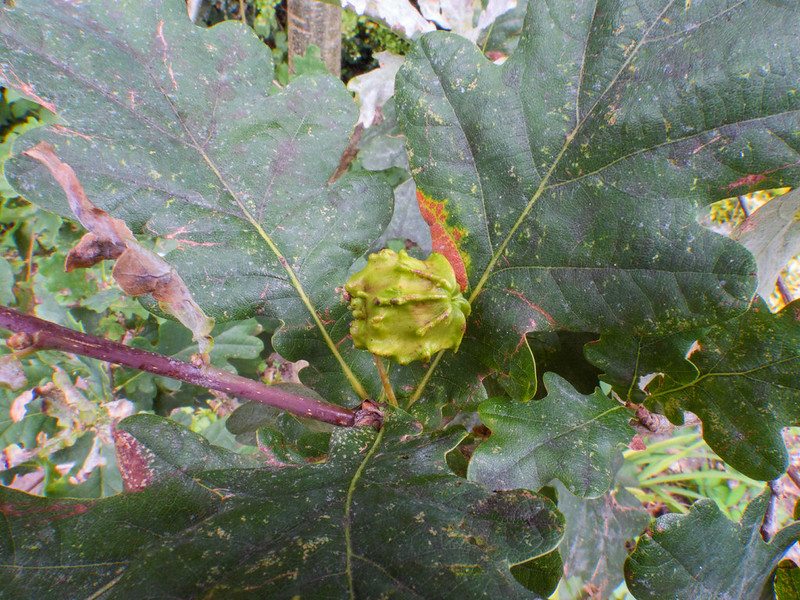
These acorns, on oaks in Bantock Park, are contorted because a wasp has laid an egg in them. The wasp was an oak knapper wasp, and the acorns have become oak knapper galls. There’s twenty or more different species of wasps which lay their eggs in oaks, each of which produces a different type of gall. The most familiar is the so-called oak-apple.

I’ve visited different sections of the park a couple of times since the knapper galls were pointed out to me. Every single oak I’ve checked has had every single acorn (at least those visible from ground level) visited by a wasp.

Finally, some way into August, a few days of dry and hot weather meant a few more insects started to appear. Buddleias were still in flower, although just the highest and least visible flowers.
Still, at last they lived up to their name of butterfly bush a little. Several species visited, though still in small numbers. Most frequent were small peacock butterflies, showing themselves often in semi-silhouette. There was also at least one red admiral, which hid itself whenever there was a camera nearby.